系统分析与设计 Lesson 7
1. 领域建模
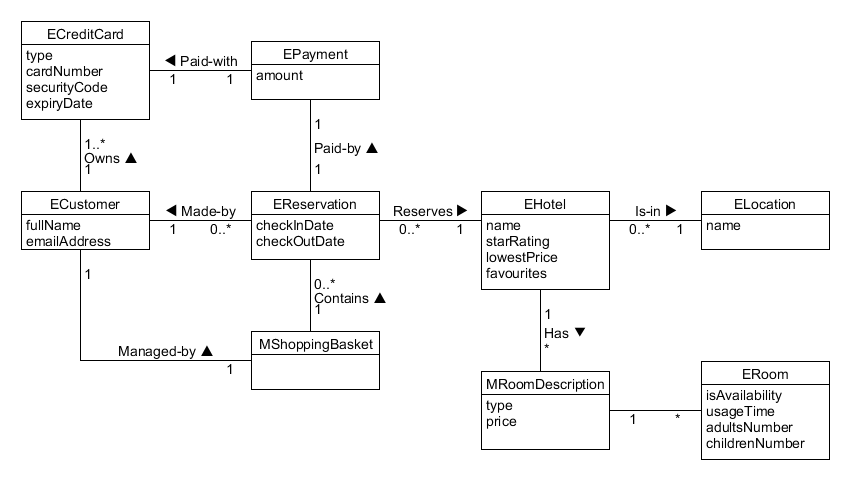
a. 阅读Asg_RH文档,按用例构建领域模型。
根据Task2的要求,使用工具UMLet绘制“Reserve Hotel”的领域模型图如下:
b. 数据建模(E-R 模型)
- 按 Task 3 要求,给出系统的 E-R 模型(数据逻辑模型)
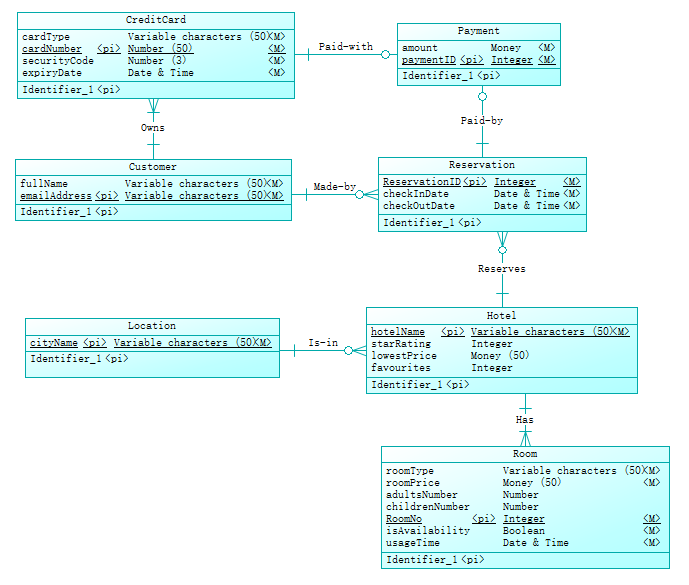
- 导出 Mysql 物理数据库脚本
这里使用的数据库系统为MySQL 4.0:
drop index Owns_FK on CreditCard;

drop index "Paid-with_FK" on CreditCard;

drop table if exists CreditCard;

drop table if exists Customer;

drop index "Is-in_FK" on Hotel;

drop table if exists Hotel;

drop table if exists Location;

drop index "Paid-by_FK" on Payment;

drop index "Paid-with2_FK" on Payment;

drop table if exists Payment;

drop index Reserves_FK on Reservation;

drop index "Made-by_FK" on Reservation;

drop index "Paid-by2_FK" on Reservation;

drop table if exists Reservation;

drop index Has_FK on Room;

drop table if exists Room;

/*==============================================================*/
/* Table: CreditCard                                            */
/*==============================================================*/
create table CreditCard
(
   cardType                       varchar(50)                    not null,
   cardNumber                     numeric(50,0)                  not null,
   paymentID                      int,
   emailAddress                   varchar(50)                    not null,
   securityCode                   numeric(3,0)                   not null,
   expiryDate                     datetime                       not null,
   primary key (cardNumber)
)
type = InnoDB;

/*==============================================================*/
/* Index: "Paid-with_FK"                                        */
/*==============================================================*/
create index "Paid-with_FK" on CreditCard
(
   paymentID
);

/*==============================================================*/
/* Index: Owns_FK                                               */
/*==============================================================*/
create index Owns_FK on CreditCard
(
   emailAddress
);

/*==============================================================*/
/* Table: Customer                                              */
/*==============================================================*/
create table Customer
(
   fullName                       varchar(50)                    not null,
   emailAddress                   varchar(50)                    not null,
   primary key (emailAddress)
)
type = InnoDB;

/*==============================================================*/
/* Table: Hotel                                                 */
/*==============================================================*/
create table Hotel
(
   hotelName                      varchar(50)                    not null,
   cityName                       varchar(50)                    not null,
   starRating                     int,
   lowestPrice                    float(50,0),
   favourites                     int,
   primary key (hotelName)
)
type = InnoDB;

/*==============================================================*/
/* Index: "Is-in_FK"                                            */
/*==============================================================*/
create index "Is-in_FK" on Hotel
(
   cityName
);

/*==============================================================*/
/* Table: Location                                              */
/*==============================================================*/
create table Location
(
   cityName                       varchar(50)                    not null,
   primary key (cityName)
)
type = InnoDB;

/*==============================================================*/
/* Table: Payment                                               */
/*==============================================================*/
create table Payment
(
   amount                         float(8,2)                     not null,
   paymentID                      int                            not null,
   cardNumber                     numeric(50,0)                  not null,
   ReservationID                  int                            not null,
   primary key (paymentID)
)
type = InnoDB;

/*==============================================================*/
/* Index: "Paid-with2_FK"                                       */
/*==============================================================*/
create index "Paid-with2_FK" on Payment
(
   cardNumber
);

/*==============================================================*/
/* Index: "Paid-by_FK"                                          */
/*==============================================================*/
create index "Paid-by_FK" on Payment
(
   ReservationID
);

/*==============================================================*/
/* Table: Reservation                                           */
/*==============================================================*/
create table Reservation
(
   ReservationID                  int                            not null,
   hotelName                      varchar(50)                    not null,
   emailAddress                   varchar(50)                    not null,
   paymentID                      int,
   checkInDate                    datetime                       not null,
   checkOutDate                   datetime                       not null,
   primary key (ReservationID)
)
type = InnoDB;

/*==============================================================*/
/* Index: "Paid-by2_FK"                                         */
/*==============================================================*/
create index "Paid-by2_FK" on Reservation
(
   paymentID
);

/*==============================================================*/
/* Index: "Made-by_FK"                                          */
/*==============================================================*/
create index "Made-by_FK" on Reservation
(
   emailAddress
);

/*==============================================================*/
/* Index: Reserves_FK                                           */
/*==============================================================*/
create index Reserves_FK on Reservation
(
   hotelName
);

/*==============================================================*/
/* Table: Room                                                  */
/*==============================================================*/
create table Room
(
   roomType                       varchar(50)                    not null,
   roomPrice                      float(50,0)                    not null,
   adultsNumber                   numeric(8,0),
   childrenNumber                 numeric(8,0),
   RoomNo                         int                            not null,
   hotelName                      varchar(50)                    not null,
   isAvailability                 bool                           not null,
   usageTime                      datetime                       not null,
   primary key (RoomNo)
)
type = InnoDB;

/*==============================================================*/
/* Index: Has_FK                                                */
/*==============================================================*/
create index Has_FK on Room
(
   hotelName
);

alter table CreditCard add constraint FK_Owns foreign key (emailAddress)
      references Customer (emailAddress) on delete restrict on update restrict;

alter table CreditCard add constraint "FK_Paid-with" foreign key (paymentID)
      references Payment (paymentID) on delete restrict on update restrict;

alter table Hotel add constraint "FK_Is-in" foreign key (cityName)
      references Location (cityName) on delete restrict on update restrict;

alter table Payment add constraint "FK_Paid-by" foreign key (ReservationID)
      references Reservation (ReservationID) on delete restrict on update restrict;

alter table Payment add constraint "FK_Paid-with2" foreign key (cardNumber)
      references CreditCard (cardNumber) on delete restrict on update restrict;

alter table Reservation add constraint "FK_Made-by" foreign key (emailAddress)
      references Customer (emailAddress) on delete restrict on update restrict;

alter table Reservation add constraint "FK_Paid-by2" foreign key (paymentID)
      references Payment (paymentID) on delete restrict on update restrict;

alter table Reservation add constraint FK_Reserves foreign key (hotelName)
      references Hotel (hotelName) on delete restrict on update restrict;

alter table Room add constraint FK_Has foreign key (hotelName)
      references Hotel (hotelName) on delete restrict on update restrict;
- 简单叙说 数据库逻辑模型 与 领域模型 的异同
相同点:
- 领域模型的实体类、类属性以及联系依次对应数据库逻辑模型的实体、实体属性和关系,它们有相同的名字以及相同的数据类型,这些都是与数据库的构建有关。
不同点:
- 领域模型中包含有中介实体,而与数据库相关密切的数据库逻辑模型中是不存在中介实体的。
- 数据库逻辑模型最主要应用在数据库构建方面,而领域模型除了数据库构建,还能用于描述其他模型架构。
- 数据库逻辑模型能够转换为物理模型,进而转换成具体的数据库对象,原来的“实体-关系”转换成“表-外键”,实体的属性转换为表的列,同时每个列的数据类型转换为对应的DBMS中支持的数据类型,因此E-R模型中会存在领域模型中没有的主键、外键等概念。